|
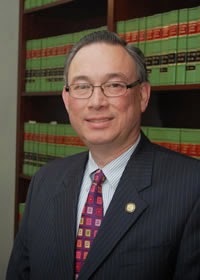
| Former Judge Dianna Bennington |
Bennington subsequently was charged with 13 counts of misconduct filed by the Judicial Qualifications Commission based upon her handling of the Westbrook contempt and other cases as well as a domestic disturbance she was involved in. Bennington recently agreed to a lifetime ban on serving as a judge in settlement of the charges.
Bennington filed her grievance against me on February 25, 2014. In the nearly one year time since then, Witte and the Commission provided me with zero notice that a grievance had been filed against me.
That is in keeping with the manner in which the Disciplinary Commission operates. Former Executive Secretary Lundberg maintained a grievance against me for at least 14 years, filed against
 me in 1994, never informing me that the grievance had (supposedly) been dismissed in 2008. (Despite my request for the information, the Commission has provided no proof whatsoever that it was dismissed in 2008 as claimed by the Commission.) That grievance involved supposedly false information I had submitted with a grievance I had filed back in 1990 against a Marion County magistrate. When, in 1994, I indicated to Gov. Bayh officials that I wanted to talk to investigators about the magistrate, Lundberg within days filed a one sentence grievance saying I had provided false information with the 1990 grievance. I took it as an attempt to stop me from talking to investigators and to discredit what I had claimed in the 1990 grievance.
Not once in 14 years did Lundberg ever identify what I supposedly lied about or provided me with the first shred of evidence in support of his allegation. In response, I suggested he submit the matter to the Marion County Prosecutor for a perjury prosecution if I lied. He did. I met with the grand jury investigator who was baffled that Lundberg had sent over the allegation against me but had no given them no evidence whatsoever in support of his one sentence allegation. Needless to say, Lundberg's phony accusation was not even deemed worthy of submitting to a grand jury. Years later, the magistrate was up for another judicial opening. Within a week or so of a story appearing in the Indianapolis Star about the opening, Lundberg sent me a certified letter saying the several year dormant grievance was being docketed for investigation, which I took as another attempt by the Executive Secretary to silence and discredit me should I talk to investigators. In the entire time, at least 14 years that the grievance pended, the Commission did no investigation.
My experience is not alone. Court of Appeals Judge Buchanan, with whom I clerked, had a grievance pending against him for years that went nowhere. (Judge Buchanan, along with Justice Pivarnik, had been an opponent of the appointment to the Court of Randall Shepherd, who later, as Chief Justice, exercised tremendous authority over the Disciplinary Commission that maintained the grievance against Buchanan.) The other day, I learned of a grievance that was pending multiple years against a prominent attorney only to apparently be dismissed with the aid of Barnes & Thornburg, the law firm which many say exercises undue influence over the Disciplinary Commission.
 |
| Michael Witte |
Let's face It, the Indiana Supreme Court Disciplinary Commission operates as a star chamber, working under a cloak of secrecy with virtually no oversight. Grievances should not be allowed to pend for years; baseless charges filed by the DC should be subject to summary dismissal. Both Lundberg and Witte abused their power, with the latter now using the immense authority of the Disciplinary Commission to go after public critics and settle old scores.
The time is long past for Chief Justice Rush and the Indiana Supreme Court to order an independent investigation of the Disciplinary Commission, to conduct an audit of the secret grievance files maintained against attorneys, and reform the rules so that there is more transparency and evenhandedness in the handling of disciplinary cases. The attorney disciplinary process in Indiana should focus first and foremost on protecting the public from dishonest attorneys, and certainly never be used to protect the Disciplinary Commission and its Executive Secretary from being exposed and criticized for their own misconduct in enforcing the rules.