Tuesday, July 29, 2014

Indiana Disciplinary Commission Doubles Down on Retaliation Against Ogden; Points to Need for New Leadership

No one though should accuse Executive Secretary Witte of not being persistent.  With his prosecution of me apparently not being well received before the Supreme Court, he filed a new grievance against me.  This time Witte is claiming that I violated the confidentiality of a person who contacted me about filing a lazy judge motion against Marion County Judge Patrick McCarty who she believed had mishandled her child custody case, leaving her child in danger.  The potential client had reached out to me because she had found my blog and wanted legal representation and her story told.  I informed her I could not represent her because McCarty had been a witness against me with regard to one of the grievances Witte had filed.  I didn't want it to look like my filing a lazy judge praceipe was retaliation against Judge McCarty for testifying against me.

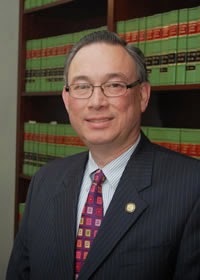
Executive Secretary Michael Witte
A few days later the woman was shot 13 times by her ex outside a day care center on the northwest side of Indianapolis.  I wrote on my blog about her being shot and the lazy judge praecipe she filed pro se that Judge McCarty had attempted to reject but was overruled by the Indiana Supreme Court.  On my blog, I wrote about my having talked to the woman about legal representation.  (By the way, the fact that an attorney and possible client meet and discuss possible legal representation is not in and of itself protected by attorney-client privilege.)   The woman unbelievably survived the shooting.  Although she said she had no problem with the article I wrote, that did not stop Witte from filing a grievance against me, without even talking to her, in an effort to claim the woman's confidentiality rights had been violated. 

One would think Witte would have been chastised by the Supreme Court opinion in my case rejecting almost the entire Disciplinary Commission's prosecution of me.  Not so. The Commission is doubling down on its retaliatory efforts  Apparently the very Disciplinary Commission attorney who prosecuted me and badly lost, who was also the interim Executive Secretary of the Commission between Donald Lundberg's tenure and Michael Witte, is personally conducting an investigation of the new grievance.

One of the biggest complaints from Indiana attorneys is that they can't speak out about the disciplinary process because they might face retaliation from the Indiana Disciplinary Commission.  Indeed when I first wrote about the Commission in January 2011, and its targeting of small firm and sole practitioners almost exclusively, I immediately appeared on the radar of Executive Secretary Michael Witte who within a matter of months began filing grievances against me. 

The Executive Secretary has almost absolute power when it comes to dragging attorneys into the disciplinary process.  Even if the Commission loses, the attorney's career is often irreparably damaged and the attorney forced into paying tens of thousands of dollars in legal fees and expenses Thus, the Executive Secretary needs to be someone with good temperament and who is above using his or her position to retaliate against critics and those who best the Commission before the Supreme Court. 

People should reminded that this is not the first time Witte appears to have used his official position  to seek retaliation against people who oppose him.  Witte began his career at the Disciplinary Commission with a grievance filed against him alleging he had abused his position as county attorney to settle political scores.  Republicans in Dearborn County had backed a different candidate in the primary against Witte, who was then Dearborn County Superior Court Judge.  Witte then became county attorney and used his position to ask that a couple Dearborn County politicians, who had supported his opponent in the primary, be prosecuted for Hatch Act violations.  The feds rejected Witte's efforts, deciding there were no Hatch Act violations in Dearborn County.  No word on what happened to the disciplinary grievance filed against Witte but you can bet with Witte assuming the helm it went nowhere.

It's time that the Indiana Supreme Court remove Witte from his position and appoint a new Executive Secretary who has a better temperament and who will refocus the efforts of the Commission on going after unethical attorneys whose conduct endangers the public.

Wednesday, July 23, 2014

University of Denver Law Professor Loses Attempt to Silence Blog Critic Through Disciplinary Process

An update to a story I wrote about this past January, the blog Outside the Law School Scam reports that the  University of Denver Law Professor Nancy Leong has lost her attempt to get an attorney who criticized her anonymously disciplined.  The investigation (why was there one to begin with?) has closed. 


In my earlier article I quoted from Jonathan Turley's article on the same subject:
There is a free speech controversy swirling around an ethics complaint in Illinois brought by University of Denver law professor Nancy Leong. Leong runs a blog site called Feminist Law Professors and recently discovered the identity of an anonymous commenter who has, according to Leong, left racist and sexist comments. She says that he is a a public defender in his late 40s and she wants him punished for his comments. We have discussed the free speech rights of public employees in an earlier column and blog postings, including the right to speak on blogs and Internet sites. The actions of Leong are troubling for those of us who believe strongly in free speech values, including the right to anonymity.   
The poster used “dybbuk” in posts that referenced Leong. In one post, he talks about a
Prof. Nancy Leong
28-year-old law grad and wrote “I think she has the right age, gender, credentials, and eager-to-please attitude for an ‘odd job’ I have in mind . . . Basically it involves the girl dressing up as a law professor, bending over, and trying to ask me questions about International Shoe while I spank her with a wet slipper.” He also criticized Leong, including her presentation in Hawaii on “racial capitalism,” stating “Now that is what I call a gravy train or, shall I say, a luau train. Law professors enjoying a free Hawaii vacation at some seaside hotel. All they have to do is attend some ‘annual meeting’ of some ‘society’ where they pretend to listen to Leong yap about ‘pragmatic approach[es] of reactive commodification,’ while undressing her with their eyes.”
Leong found dozens of references about her on five different websites as part of her investigation, including disparaging her scholarship and describing her as “a comely young narcissist” and a “law professor hottie.” She also said that other professors that he criticized on these various sites were overwhelmingly directed at women and professors of color. She considers anonymous postings with sexist elements to be unethical. She writes in the complaint that “There are over 6,000 tenured and tenure-track law professors in the United States have less practice experience than I do. Most of them have weaker publishing records than I do. Most of them have weaker teaching evaluations than I do. Almost all of them have been members of the legal academy longer than I have. Almost all of them have more power and prominence than I do. In light of these facts, it is difficult to think of a reasonable explanation for [dybbuk's] obsessive attention to an untenured professor.”
As I noted at the time, Turley was far too kind to Prof. Leong who, as a law professor, should have had a lot more respect for the First Amendment and a free exchange of ideas than she apparently does.  But Prof. Turley finishes on the right note:
...Leong proceeded to file a formal complaint. That is where I have to respectfully disagree with Professor Leong. The effort to punish this poster threatens free speech and creates a chilling message for those who wish to engage in discussions on an anonymous basis. I know that that is not her purpose but she is attempting to discipline a person for criticizing her and engaging in language that she finds offensive. That is anathema for most civil libertarians even though most of us find these writings to be offensive and insulting. As academics, we owe a special duty to free speech and the need to preserve protected spaces for such speech on campus and the Internet. This is precisely why it was so alarming to see Jewish students recently seek to strip anonymity for posters of material that they find objectionable. Free speech comes at a cost, particularly for those who become public figures. The Internet is rife with hateful and false statements. However, it is also the single greatest advance in free speech in history. I am confident that the work of Professor Leong will be remembered long after dybbuk has passed into well-deserved obscurity. However, this should not be part of that legacy.

Friday, July 11, 2014

Do Disciplinary Commisson Attorneys Have An Obligation to Be Honest With the Indiana Supreme Court?

Since the Disciplinary Commission in Indiana is an arm of the Indiana Supreme Court are its attorneys, who are Supreme Court employees, exempt from ethical rules when filing documents with the Supreme Court?

I ask that because throughout my more than year long ordeal with the Disciplinary Commission's over-the-top prosecution of me for criticizing a judge in a private email and sending a letter to judges explaining the law that's supposed to be followed when divvying up civil forfeiture assets, I have had to deal with a Commission attorney - actually an attorney who was acting Executive Secretary of the Commission between the terms of Donald Lundberg and Michael Wittte - who has been  more than willing to make knowingly false representations to the Indiana Supreme Court, sometimes in the form of intentionally omitting information and other times simply lying to the Court.

It began with the Commission in filing formal charges against me claiming I had engaged in "ex parte communication" with Marion County judges by sending the civil forfeiture letter.    Of course the letter I sent was not ex parte, which the Commission knew.  I had copied the letter to the prosecutor, the Attorney General and the Marion County Public Safety Director, the very people involved in the issue of the division of the civil forfeiture proceeds at the trial and appellate level.

Despite the fact that the Commission's allegation was blatantly false, the Commission attorney's continued to make that allegation.  In its order, the Indiana Supreme Court summarily disposed of the claim, pointing out I had no cases before the judges and it was not an ex parte communication.  That was great, but why was I required to for over a year defend myself against this blatantly false claim?  Additionally, why was the Commission's attorney allowed to continually make the false statement that I had sent an "ex parte" letter.

Also, at various times the Commission has claimed I filed "dilatory" motions.  Of course "dilatory" means a baseless motion designed to seek a delay in the proceedings and I had not sought such a delay.  It was on its face a blatantly false accusation.  The fact it was false didn't stop the Commission's attorney from making the claim in court filings.

But it gets worse.  I have filed to have the Supreme Court reconsider its order that I pay 1/2 of the expenses of my prosecution in light of the Commission needless running up the expense bill to the tune of more than $20,000,.  (Yes the Commission spent more than $20,000 in expenses prosecuting me for the email and civil forfeiture letter.)  The Commission had refused to enter into a stipulation of facts, for example, which would have eliminated the need for the 11 1/2 hour hearing that was held for which I'm now obligated to pay half the expense.  How did the Commission's attorney respond?  Once again with deliberate factual misrepresentations to the Indiana Supreme Court.

The Commission represented to the court that I knew all about the Disciplinary Commission's was conducting an investigation relating to the allegations made in the grievances.    That is completely false.  After filing my formal response to the grievances filed by Executive Secretary Michael Witte in early-mid 2011, and receiving an acknowledgement of that response, I was never once contacted again by the Commission again.  Nor were any of my witnesses I provided ever contacted.  I never heard one word from the Commission or had anything to suggest an investigation was being conducted.    In the Spring of 2013, I met with a top official in the Governor Pence administration, seeking in particular a position where I would be a legal watchdog of the state's retirement accounts, that the Commission rushed forward to file charges against me.  The timing could have been a coincidence but then again if it quacks like a duck...  But to suggest to the Court that I knew all about the Commission investigating the matter, could not be more false.  To this day, I doubt there ever was an actual investigation conducted before the charges were filed.

In the recent court filing, the Commission's attorney claims that the Commission asked for a settlement meeting with me and that meeting lasted three hours.  No such request for a settlement meeting ever happened.  I was deposed by the Commission, following which we had a brief conversation about settlement.   The Commission's attorney knew this but he apparently had no problem making a deliberate misrepresent the deposition as a meeting on settlement to the Indiana Supreme Court.

In the Court filing the Commission's said my proposed resolution of the case as a public reprimand was rejected by the Commission.  Again, that is false.  The Commission never even acknowledged I had made settlement offer. The Commission's attorney also reports to the Supreme Court that I refused to admit any rule violation in conjunction with my offer of a public reprimand.  Again, that is completely false.  Such a concession IS IN WRITING in the formal settlement offer tendered to the Disciplinary Commission. Yet this Commission's attorney, despite that written documentation, felt it was perfectly okay to lie to the justices of the Indiana Supreme Court about the settlement offer.

I have been an attorney for 25 years.  Never have I even considered the possibility of making flat out false factual allegations in court filings much less to the Indiana Supreme Court.   To the credit of most of my colleagues, I've rarely seen attorneys who were willing to violate not only ethical rules but than infamous Rule 11 by filing false statements of fact.  Yet during my prosecution I've had to constantly deal with a Commission attorney who is more than willing to make false and misleading factual statements to the Indiana Supreme Court if doing so advances the Commission's prosecution of its leading critic.

I would point to the "lack of candor" rule that makes what the Commission's attorney is doing a violation of the Indiana Rules of Professional Conduct:
Rule 3.3. Candor Toward the Tribunal
(a)    A lawyer shall not knowingly:
(1)    make a false statement of fact or law to a tribunal or fail to correct a false statement of material fact or law previously made to the tribunal by the lawyer; 
(2)    fail to disclose to the tribunal legal authority in the controlling jurisdiction known to the lawyer to be directly adverse to the position of the client and not disclosed by opposing counsel; or      
(3)    offer evidence that the lawyer knows to be false. If a lawyer, the lawyer's client, or a witness called by the lawyer, has offered material evidence and the lawyer comes to know of its falsity, the lawyer shall take reasonable remedial measures, including, if necessary, disclosure to the tribunal. A lawyer may refuse to offer evidence, other than the testimony of a defendant in a criminal matter, that the lawyer reasonably believes is false.
Again I ask, are Indiana Supreme Court Disciplinary Commission attorneys exempt from that rule when filing documents with the Indiana Supreme Court?

Thursday, June 19, 2014

Indiana Disciiplinary Commission Needs ELECTED Board Members and More Transparency

Since my case was handed down two days ago, I've been praised by my fellow attorneys for standing up to the Commission, for making public how the agency operates and the tactics that it engages in.  Those attorneys often share with me their horror stories of how they were treated by the Commission and how it has hurt them, sometimes destroyed them, professional and financially.   It's sad. The legal profession deserves better.

I am a student of government.  I have worked in every branch of government, been involved in politics, and taught political science, i.e. government,  at the college level for more than 20 years.  There is an ironclad rule of government operations that says if an agency is allowed to operate without meaningful oversight or without transparency, the agency will inevitably begin abusing the power it has been given.  Some would call it corruption.  Over the years, we have seen that with regard to the Internal Revenue Service and the National Security Agency. 

The Indiana Disciplinary Commission operates with no real oversight by the members of the Indiana Bar (the members of the Commission are appointed by the Indiana Supreme Court) and its operations are shielded from any meaningful review by secrecy rules the Commission jealously defends.  Of course, the confidentiality rules are supposed to be about protecting attorneys who might be wrongfully accused of misconduct.  They were never intended to protect the Commission from its own misconduct.

Thus, the Commission operates: 1) in secrecy; and 2) without meaningful oversight.  Is there really any surprise that we're seeing problems with the Commission abusing its powers?  We should EXPECT those abuses considering how the Disciplinary Commission is set up and is allowed to operate.

It is clear that the appointed members of the Disciplinary Commission have done absolutely nothing to curb the poor priorities and misguided disciplinary prosecutions of the current Executive Secretary Michael Witte or his predecessor, Donald Lundberg.  While attorneys all over the state are doing unethical things that hurt people (like stealing money from trust accounts), the Commission has devoted enormous resources to go after attorneys for minor alleged violations that have nothing to do with unethical behavior that hurts people who come into contact with the legal system.  Further, and more disturbingly, the Commission appears to be engaging in politics in the charges it files and how their "investigations" are carried forward.  The tip off to the fact that this is going on is that attorneys are terrified of publicly criticizing the Commission because they know in the past the Commission has retaliated against anyone who challenges its authority.

The Indiana Supreme Court needs to let the Indiana bar pick the members of the Disciplinary Commission.  You can bet the first election under such a system will involve campaigns by reformers who want to end the abuses and misguided priorities of the Commission.

We also need much more transparency about the operations of the Commission.  The agency shouldn't be able to use confidentiality rules designed to protect attorneys to instead shield any sort of meaningful review of how it operates.

I hope the Indiana Supreme Court has an appreciation for the enormous power of the Commission and how it has in the past abused its power to destroy attorneys personal and professional lives.  Defending oneself against allegations of misconduct by the Commission can cost tens if not hundreds of thousands of dollars in attorney's fees and lost business.   It can permanently damage one's career.  Yet there are no rules governing how the Commission conducts its investigations or how long it can keep grievances hanging over attorney's heads. Although the term "due process" governs the operations of our legal system, when it comes to attorney discipline there is no such thing as due process.

I know that first hand.  I had a ONE SENTENCE grievance filed against me by the Commission, a claim that I had lied in a grievance I had filed four years earlier involving the conduct of a magistrate.  The Commission was never made to produce any evidence in support of that ONE SENTENCE claim and yet it was allowed to hang over my professional career for at least 14 years by the Commission's own admission. Actually the Commission never bothered to tell me the grievance filed in 1994 was dismissed in 2008, until 2013.

Just recently I was prosecuted on a count involving sending an "ex parte" letter to Marion County judges about the process they are supposed to be following when dividing up the money at the end of a civil forfeiture proceeding.  The Commission knew darn well that it was not "ex parte" and that it was not a violation of the rules. Yet the Commission was allowed to zealously prosecute this bogus charge and I had absolutely no right to seek summary dismissal of it.  The Indiana Supreme Court agreed that what I did was not a violation of the rules.  Then why was I forced to spend so much time and money to defend myself against the charge?  And why aren't their consequences for the Commission pursuing a completely meritless charge?

To conclude, the Indiana Bar needs an ELECTED Disciplinary Commission and the Supreme Court needs to rewrite the rules so that there are much, much more transparency in the operations of the Commission.

Wednesday, June 18, 2014

The Indiana Supreme Court Hands Down Decision; Why My Case Points to the Need for Reform of the Disciplinary Process

The decision on my disciplinary case was released yesterday.  Overall, it was a good decision for yours truly.  The Indiana Supreme Court soundly rejected the Commission's request and the Hearing Officer's recommendation that I be suspended for a year without automatic readmission, the latter of which would have made the suspension much longer and quite ending my legal career altogether.  Instead the Court decided the case only merited a 30 day suspension with automatic reinstatement.


Getting to the specifics of the case, the Court divided my comments in the email criticizing the judge up into four categories and found that only the one in which I made the factual mistake of stating that the judge I criticized presided over the opening of the estate unsupervised without bond, when it was in fact the case was opened by another judge who briefly had the case some two years before I became involved.  In the other categories of speech the Court found the comments were constitutionally protected or I had a reasonable basis for making the statements.

Then on the second charge, that I had improperly tried to influence judges via an ex parte communication, a letter I sent to Marion County judges about the process they are supposed to be following when distributing civil forfeiture proceeds,  the Court found there was no violation, even noting that the letter, which the Commission continually claimed was ex parte, was sent to the prosecutor, the Attorney General, and the public safety director, all parties involved in the issue of how the civil forfeiture money gets divvied up at the trial and appellate level.

So if you're keeping score at home, I won on 4 of the 5 points of law, 80% of the case.


The good news on attorney free speech is that the Indiana Supreme Court appear to recognize that statements of opinion are not covered by Rule 8.2.    On the other hand, the Court failed to distinguish between public and private communications, thereby leaving attorneys vulnerable to having their private emails and conversations scoured for Rule 8.2 violations for judicial criticism.  Also, the Court fell short of the apparent position taken by the United States Supreme Court that attorney speech can only be curtailed when it directly affects the administration of justice in a pending case and that disciplinary rules can't otherwise be used to limit attorney free speech, including speech critical of judges. 

Attorneys from across the country are wanting an attorney free speech case to go before the United States Supreme Court to curtail states use of disciplinary rules to target attorney speech critical of judges.  I think it's inevitable that's going to happen as the U.S. Supreme Court seems to have a keen interest in free speech cases and there seems to be no support among conservatives or liberals on the Court for the types of professional sanctions states are imposing on attorneys for judicial criticism.


Back to my case, one of the things the Court found as an aggravating factor is that I was "obstreperous" with the Commission.  I had to look the word up to confirm the meaning.  According to one on-line dictionary, the word means " resisting control or restraint in a difficult manner; unruly."Certainly I did resist what the Commission was doing to me.  The logical conclusion from the Court's decision is that the case was overcharged and overprosecuted.  But I wish the Court would take a closer look at how the Commission conducts itself in these cases and the extremely poor priorities of Executive Director Michael Witte that had led to enormous resources being devoted to cases like this while neglecting to even do an investigation when attorneys such as William Conour are accused by clients of stealing money.    If the Court takes a closer look at what happened in my case, I think the it will find conduct by the Commission to be totally out of line:
  • Shortly after writing an article critical of the Commission, Executive Secretary Witte began filing grievances against me, including based on a letter from a judge that had sat dormant in his office for months.
  • The Commission made no effort to talk to me or any of my witnesses during the supposed investigation of the grievances.  In fact, there is no evidence that there was ever an investigation ever done during the grievance procedure.
  • Two years later, and with no action whatsoever on the grievances, I met with Governor Pence's right hand man and discussing a key watchdog position at the public employee retirement commission.  Then I was suddenly hit by charges filed by the Commission which effectively knocked me out of consideration for any job in the Pence administration.  Once again, there had been no investigation or attempt to talk to witnesses before the Commission filed the grievance.
  • The Commission spent enormous time and resources to put together a very lengthy charging complaint against me as if I committed the most serious ethical violations.
  • The Commission filed Count II against me in which the Commission falsely characterized my civil forfeiture letter as an "ex parte" communication.  Despite my repeated plea that it wasn't ex parte and it wasn't a violation of the rules, the Commission refused to drop the charge causing me to spend time and resources to defend against the allegation. The Indiana Supreme Court found that it was not a violation.
  • During these proceedings, the Commission steadfastly refused any effort to resolve matters with a settlement.  It was clear that Executive Secretary Michael Witte wanted my law license taken away and he was going to devote as much resources as needed to accomplish that.
  • Rather than enter into a stipulation of facts as 90% of the facts in the case were undisputed, the Commission insisted on what turned out to be an 11 1/2 hour hearing, inconveniencing numerous people, including two sitting judges.
  • During the 11 1/2 hearing, the room was filled with scores of Disciplinary Commission, a testament to the importance the Commission placed on taking away my license.
  • Throughout my prosecution, it was clear that the Commission was being motivated by my criticism of the Commission.  This came out explicitly when in some of the filings, the Commission asked for a more severe punishment because I had been publicly critical of the Commission.
The way the Commission conducted itself in this case, and the way that it conducts itself in other cases, is worthy of an investigation by the Indiana Supreme Court.  Hopefully my case will be a catalyst for such an investigation and for much-needed reform to the attorney disciplinary process.

Friday, May 9, 2014

Hearing Officer Criticizes Indiana Disciplinary Commission for its Handling of Advertising Disciplinary Case

The Indiana Lawyer has an excellent article about the poor proprietorial decisions of the Indiana Supreme Court Disciplinary Commission when it came to a recent advertising disciplinary case:
A recent Indiana attorney disciplinary order quickly gained the notice of the ABA Journal and legal blogs, prompting some analysts to predict the ruling would have a chilling effect on lawyers here and around the country. But the case also involved pursuit
of discipline that a court-appointed hearing officer called “disconcerting.

The Indiana Supreme Court’s April 11 opinion, In the Matter of: Anonymous,
Crown Point Attorney Tim Kelly
45S00-1301-DI-33, concluded a protracted attorney discipline case with a private reprimand. The lawyer was found to have made misleading communications regarding legal services offered in testimonials, and he failed to include his office address on a promotional item.
Let me stop there.  Once the Disciplinary Commission files charges, they are public, and any reasonable hope of an actual "private reprimand" is extinguished.  It didn't take much effort on the part of Indiana Lawyer writer Dave Stafford to figure out who the attorney is.

The article continues:
But the offending testimonials weren’t on the attorney’s website. They appeared on the website for Law Tigers, a network of the American Association of Motorcycle Injury Lawyers that the lawyer subscribed to. Additionally, the promotional item that lacked an address did conform with advertising rules at the time it was produced. After a rule change added a requirement that office addresses appear on advertising, the lawyer acknowledged the change escaped his notice. Once aware of the rule change, he added his address to Law Tigers promotional items that he passed out at biker events, according to the record.

A cursory review of the case reveals that anonymous is Tim Kelly, a longtime Crown Point personal injury attorney. A closer examination of the record suggests Indiana Supreme Court Disciplinary Commission attorneys went too far and employed tactics in prosecuting the case against Kelly that may have violated Rules of Professional Conduct.  (My emphasis.)

“My father practiced law in Indiana for 30-plus years and never had a disciplinary issue. I’ve practiced law for almost 42 years and this is the only discipline issue I’ve ever had,” Kelly said. “I’ve worked extremely hard to be ethical, honest, successful and recognized as a good lawyer. … It is really devastating that something like this resulted in me being disciplined.”

The Supreme Court disciplinary order makes no mention of problems with the commission’s investigation. But Lake Superior Magistrate Michael Pagano, who presided as hearing officer, concluded his sometimes-blistering report to the court by writing that he initially believed the commission “overreached.”
When questioned about the propriety of the prosecution, Disciplinary Commission Executive Secretary Michael Witte passed the buck to staff attorney Frederick Rice in order to speak for the Commission:
 Rice downplayed Pagano’s criticism of the commission’s prosecution of Kelly’s case. “The Supreme Court certainly did not address those issues in their opinion,” Rice said. “I doubt they put a lot of importance on that, I don’t know.”
Indiana Disciplinary Commission
Executive Secretary Michael Witte
What is remarkable is that Kelly went to extraordinary lengths to make sure he was following the rules and yet the Disciplinary Commission zealously prosecuted him anyway:
Before signing with Law Tigers, Kelly sought an opinion from the Disciplinary Commission, which it declined to provide, according to the record. He also sought an opinion from the state bar and consulted with nationally recognized attorney Lynda Shely, outside ethics counsel to AAMIL and a longtime director of lawyer ethics for the State Bar of Arizona.

“Quite frankly, it appears to Mr. Kelly that the Commission’s attempt to use him as a test case amounts to a due process violation because the Rules of Professional Conduct certainly do not make it clear that participation in (Law Tigers’) group advertising is a violation of the Rules,” Mulvaney argued in a brief to the court.

Pagano saw abuses and irregularities, too.

“The commission was well aware of (Kelly’s) due diligence,” Pagano wrote. “In fact, following receipt of his submission, the commission sent (Kelly) a letter informing him it would not be pursuing charges against him. The commission, for reasons unclear, then reversed itself and proceeded with the instant matter.”

Pagano noted in his findings that Rice had difficulty articulating a proposed sanction when asked, ultimately saying, “… that’s not the important part of this. The discipline is not the important part. It’s a determination of what the rules require and what they say.”

“(T)he idea that (Kelly) should be used as a mere instrument to re-write an exceptionally unsettled area of law troubles me deeply, especially in light of the great lengths (Kelly) went to in ascertaining whether his participation in AAMIL would cause him disciplinary grief,” Pagano wrote.
Other questions need to be asked. How much did the Kelly prosecution cost in terms of time and money?   How much did Kelly have to pay to defend himself?  How much did it hurt his career while the charges were pending?  Those are real consequences from the Commission's ill-advised, zealous prosecution of Kelly that need to be considered by the Court.

It's just a hunch but I believe there is substantial dissatisfaction with Executive Secretary Witte's leadership of the Commission.  I'd be surprised if his tenure is not near the end.  If the Court appoints new leadership of the Disciplinary Commission, it needs to insist that the new Executive Secretary reset the Commissions' priorities so they are focused on protecting he public from unethical attorneys and not spending enormous resources on pursuing attorneys for minor alleged rules violations..  The Court also needs to do a thorough investigation of the Disciplinary Commission's grievance and charging practices, providing attorneys with anonymity as they will certainly be fearful that the Commission will retaliate against anyone who publicly criticizes the Commission, a fact I know all too well.  There also needs to be much more transparency on Commission activities.  It is a law of government bureaucracy that when agencies are allowed to operate in secrecy, the result at the very least is bureaucratic misconduct.  The confidentiality rules governing the Commission are designed to protect attorneys not protect the Commission and its employees from their own misconduct which in this case may have violated the very disciplinary rules the Commission is supposed to enforce.

Monday, May 5, 2014

Is Brewington v. State a Harbinger of a New Era Allowing Judicial Criticism by Attorneys?

A number of attorneys have contacted me recently excited that the Brewington v. State decision handed down last week by the Indiana Supreme Court may signal a new tolerance for attorney criticism of judges.  Although the non-attorney blogger's conviction for intimidation of the judge was upheld, very strong language in the opinion suggests that non-threatening criticism of a judge is constitutionally protected.

Brewington, which was written by new Justice Loretta Rush, begins:
Justice Loretta Rush
The United States and Indiana constitutions afford sweeping protections to speech about public officials or issues of public or general concern, even if the speech is intemperate or caustic.
"Intemperate" is an interesting word.  When the American Bar Association in the early 1980s adopted Model Rule 8.2, the rule that governs an attorney's comments regarding judges, judicial candidates and others, the ABA specifically declared that Rule 8.2 was a constitutionally-required actual malice standard and that it was rejecting the previous rule (EC 8-6) that required that a lawyer who criticizes judicial officials "should be certain of the merit of his complaint, use appropriate language, and avoid petty criticism..."  The ABA said that the rule had been misused to "penalize criticism considered intemperate in tone." (Emphasis supplied.)

Dictionaries define "intemperate" to mean "having or showing a lack of self-control," "immoderate," "unreasonable," "lacking self-control."  Despite Model Rule 8.2 and its commentary, states across the country, including Indiana, have used Rule 8.2 to sanction attorneys for "intemperate" criticism of judges while holding that judges, among all other public officials, deserved special protection from criticism by attorneys.  One of those Indiana cases involving an "intemperate" comment involved a tenant's attorney who outside the courtroom referred to the (Marion County) Washington Township Small Claims Court as a "Mickey Mouse Court" because the landlord's attorney appeared to be running the court.

In Brewington, the Indiana Supreme Court drew a line between threats to one's reputation and threats to harm:
Fear for one’s reputation is often the price of being a public figure, or of involvement in public issues. But fear for one’s safety is not.

Here, the Court of Appeals failed to distinguish between those two types of fear. Many of Defendant’s statements, at least when viewed in isolation, threatened only to harm the victims’ reputations—hyperbolically accusing them of “child abuse” and the like. To the extent those statements were aimed at a public official or involved an issue of public concern, they are subject to the steep constitutional “actual malice” standard for defamatory speech, and the Court of Appeals erred in relying on them to support Defendant’s convictions for intimidating a judge and attempted obstruction of justice.
The very-well written opinion then proceeds to analyze the facts, determining which of Brewington's comments only threaten reputation and those which could be credibly seen as threats of physical harm.  The Court concluded that some of Brewington's comments were constitutionally protected while others an objective viewer would conclude that other comments, considering a totality of the circumstances,  constituted threats of harm.

Brewington though still had a chance to win.  The key part of the Supreme Court appeal turned on the Court's discussion of the instruction on the crime of intimidation which requires a "threat" which is defined by statute as:
“Threat” means an expression, by words or action, of an intention to:
(1) unlawfully injure the person threatened or another person, or damage property;
(2) unlawfully subject a person to physical confinement or restraint;
(3) commit a crime;
(4) unlawfully withhold official action, or cause such withholding;
(5) unlawfully withhold testimony or information with respect to another person’s legal claim or defense, except for a reasonable claim for witness fees or expenses;
(6) expose the person threatened to hatred, contempt, disgrace, or ridicule;
(7) falsely harm the credit or business reputation of the person threatened; or
(8) cause the evacuation of a dwelling, a building, another structure, or a vehicle.
I.C. § 35-45-2-1(c).
As the Supreme Court, notes, some of those statutory "threats" - such as one saying that a "threat" is exposing a person to hatred, contempt, disgrace, or ridicule" would improperly make criminal constitutionally protected speech  Thus, when the trial court included all the "threats" listed in IC 35-45-2-1(c) in its instruction, the trial court left open the possibility that the jury didn't find Brewington guilty because he physically threatened the judge, which would be unlawful, but because he exposed the judge to "hatred, contempt, disgrace, or ridicule," which would be constitutionally protected speech.

The court disposed of this contentious issue by reviewing the record and concluding that the failure to object to the definition was part of an "all or nothing" strategy of Brewington's defense counsel.  Thus, counsel "invited the error" and thus the alleged error could not be successfully raised on appeal.

The Court began its conclusion with another strong phrase suggesting that criticism of judges will be treated the same as criticism of any other public official:
It is every American’s constitutional right to criticize, even ridicule, judges and other participants in the judicial system—and those targets must bear that burden as the price of free public discourse.
While the language looks indefeasible, I am not yet convinced that the Indiana Supreme Court will conclude at the end of the day that "every American" includes attorneys.  While the U.S. Supreme Court has taken the position that attorneys are no different from other members of the public when it comes to having a First Amendment rights, with the only exception is when an attorney is speaking out about a pending case in such a way as to possibly influence the administration of that case, state supreme courts have ignored those precedents to impose harsh sanctions on attorneys for criticizing judges even without a pending case.  Indiana has led the way in laying the groundwork for those lines of cases.  In the 1979 case, In Re Matter of Terry, the Indiana Supreme Court concluded that shielding judges from attorney criticism protects the public by preserving "a fair, impartial judicial system and the system of justice as it has evolved for generations."  Thus, the Terry Court concluded that, because of this important interest, the First Amendment does not protect attorneyspeech critical of judges, thus cloaking judges with more protection from criticism than every other public official.  Later decisions by the state supreme courts, including Indiana, have continually cited Terry with approval while concluding attorney speech critical of judges is not constitutionally protected.

Is Brewington the dawning of a new era when it comes to courts recognizing the constitutional right of attorneys to criticize judges?  I hope so, but I remain skeptical.